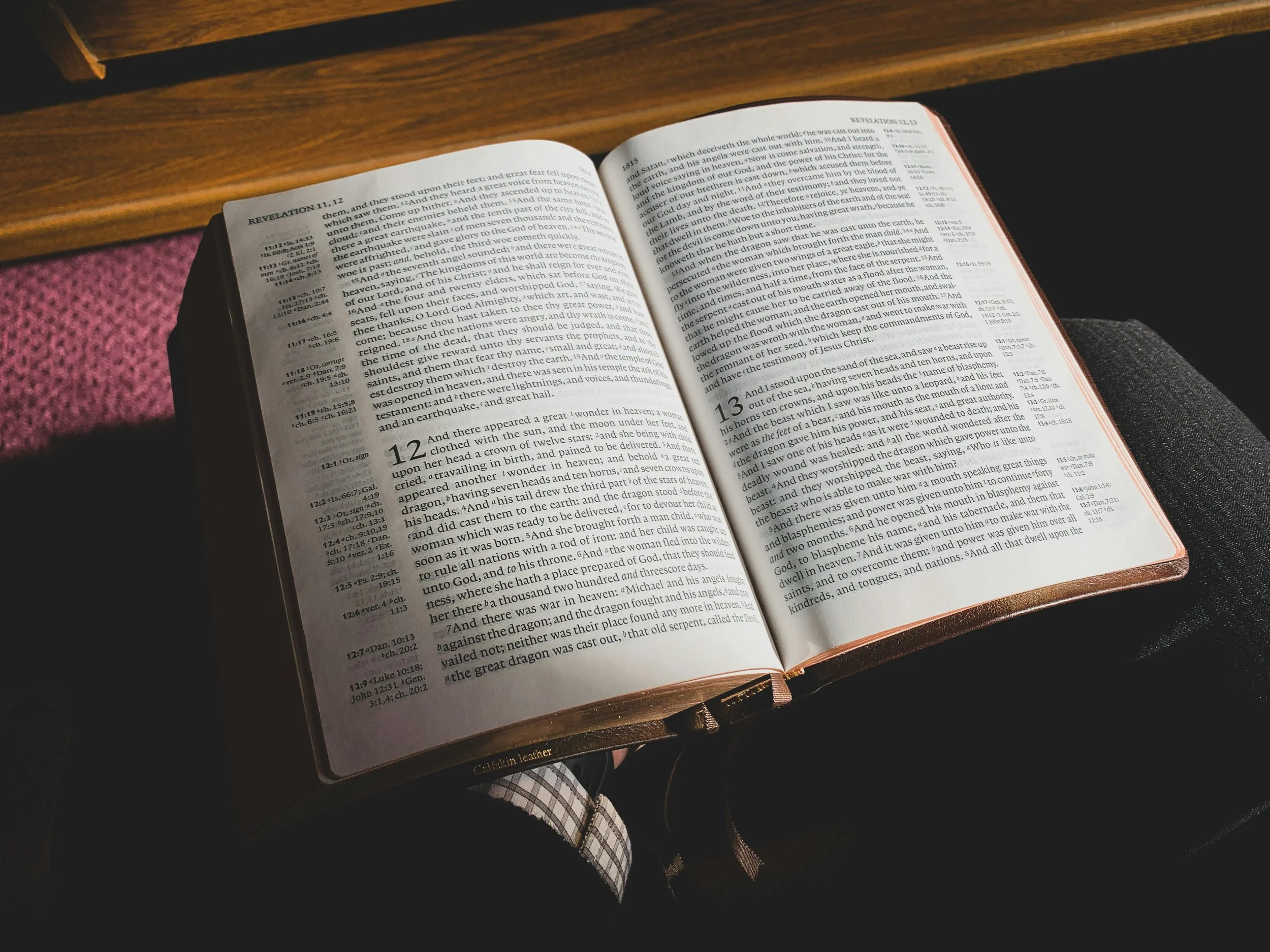
The Doctrine of Scripture (2 Timothy 3:16-17)

This sermon was preached to Emmanuel Baptist Church on 27 September 2026. The audio recording and manuscript of the sermon can be found below.
It is the best-selling book of all time, with over 5 billion copies sold to date. And yet, it is not really a book, but it is instead a collection of 66 books by over 40 different authors. It was first written in 3 different languages, on 3 different continents, across 3 different millennia. It is undoubtedly the most important religious text in human history, and is foundational to the faith of the 2.5 billion people who still follow its teachings today. What am I speaking about? Well, it is, of course, the Bible. And those are the kinds of facts you are told about it when you look online, or on Wikipedia. But what is it really? Is there a way to sum up its significance other than talking about its historical or literary value?
Well, I think, the group of churches which we belong to has done pretty good job of summing up what we all should know and believe about the Bible. The first paragraph of the doctrinal statement of the ABCI, states that we believe in: ‘The verbal inspiration and total inerrancy of the Holy Scriptures of the Old and New Testaments as originally given by God; their sole-sufficiency and final authority in all matters of faith and practice.’That’s a good summary […].
However, there is another way of working out what the Bible is. For instead of looking on Wikipedia or even at the doctrinal statement of the ABCI, we can simply turn to the pages of Scripture themselves. What is the Bible? What is this book that has influenced the course of human history, and continues to captivate billions around the world today? Well, we find the answer to that question right here, in our passage for this evening. This text has for centuries been called a locus classicus by theologians, that is a classic place. That is the term given to the biblical text that provides the clearest and greatest foundation for a particular belief, is the seat of the doctrine. […] And 2 Timothy 3:16-17 is known as the locus classicus for the doctrine of Scripture. What is Scripture? What do we believe the Bible to be? Well here, in 3:16-17 we read: [READ]
Did you notice that our text tells us two main things? Speaks of two different sides of Scripture? They are the same two things that we heard Psalm 19 meditate on this morning. The essence and effects, reality and results. What the Bible is and what the Bible does. First, in 3:16, we are told that the Bible is Breathed by God. That is what it is. And then, from 3:16-17, we are told that the Bible is Beneficial for Man. That is what it does. And those are the two points we will spend our time considering together tonight: What is the Bible? (1) The Bible is Breathed by God and (2) The Bible is Beneficial for Man. […]
(1) THE BIBLE IS BREATHED BY GOD
That is the first thing that Paul tells us there in 3:16: ‘All Scripture is breathed out by God…’. That term ‘Scripture’ is simply the word for ‘writing’, anything that is the product of a pen. And yet it is applied in a special way in the New Testament to not only encompass all the sacred writings of the Old Testament (which Paul has just mentioned in 3:15) but also those writings of the apostles that would soon be brought together in a collection called the New Testament. And Paul here tells us that all of these sacred writings, every line of scripture, or to paraphrase Jesus, every jot and tittle, even the smallest letter and tiniest point of punctuation, have all been breathed by God.
The word we have here is well translated by the ESV. It is a term likely coined here by Paul and literally means ‘God-breathed’. However, although the word is new, the idea is ancient. For from the first pages of Scripture, we are introduced to the breath of God. On the sixth day of creation in Genesis 2, we are told that God formed Adam from the dust of the ground and breathed into him, and thus Adam became a living soul. This breath of God is life-giving. However, even more than that, we also know that it is dead-raising. For in Ezekiel 37, it is this same breath of God that Ezekiel sees sweeping into the valley of dry bones and bringing those skeletons back to life before his very eyes. And here in 2 Timothy 3:16, Paul is telling us that this life-giving, dead-raising, divine breath has produced the book in our hands. That the words of this book are really the breath of God’s mouth. Just as when our breath passes through our vocal chords and out of our mouth to produce sounds and words, so too God’s breath produces the Bible. Which is why we call it the Word of God, for figuratively speaking, it is as if it proceeds through the divine vocal chords and out of the very mouth of God.
This truth is what theologians call ‘the inspiration of Scripture’. You saw that term in our Association’s doctrinal statement. And yet, sometimes that term causes confusion. For to say Scripture was inspired by God is not to say that he merely motivated the authors who wrote it, like how you are inspired to run a race or a marathon because someone motivates you to do so. No, when we talk about inspiration, we are using the term in a stronger more direct way. Which is why we don’t just talk about inspiration, but of ‘verbal inspiration’. That is, inspiration not just of the authors, but of the very words themselves.
Brothers and sisters, when we look at this book, we are listening to God. Its words are his words. It is inspired by him. Indeed, it has been expired by him. When we read these pages, we are hearing words from his mouth. And this has two important implications for us, which we will briefly consider together now. The fact that the Bible is breathed out by God has an implication for both its accuracy and also its authority. (A) Its Accuracy; and (B) Its Authority.
(A) ITS ACCURACY
When I’m speaking about accuracy here, I’m not speaking about the accuracy of a translation. Nor are we even talking about the accuracy of the underlying texts, that is the different scrolls and parchments, ancient copies that have been found across the Mediterranean world from the earliest centuries of the church.
Tonight, when I speak of the accuracy of Scripture, I am not referring to the accuracy of modern translations or ancient copies. No, I am talking about the accuracy of the original manuscript, the words that lie behind our modern translations, that came before those ancient copies. The words that (as our Association’s doctrinal statement puts it) were ‘originally given by God’. The words that flowed from the pen of Peter and Paul, came from the mouth of Moses and David. Those original words were the ones breathed out by God, and because of that those words are not merely 90% accurate like our modern translations, or even 99% accurate like our reconstructed text based on copies. No, the original words are 100% accurate. There are no errors in the Bible, which is what we mean when we say that it is inerrant. That it has no errors, is always accurate. And the reason we know it is totally inerrant, always accurate, is because it has been breathed by God. We know those words are true words, because they are his words. The trustworthiness of his character guarantees the truthfulness of his words.
I often come across this in my work as a lawyer. In the legal world, the evidence you have in a case is often based on the testimony of key individuals. And such evidence can be incredibly strong and persuasive, depending on the identity of that individual. If you put a mob boss or convicted fraudster on the stand as a witness, you can hardly be surprised if the judge or jury don’t trust their testimony. For who they are, their character, undermines what they say, their words. On the other hand, if you can put a respected community figure up there, someone who has an MBE, or a minister, or a doctor, then their character can help to strength their testimony, adds weight to their words. Because you know you can trust them, you know you can rely on what they tell you about the case.
We see this same thing earlier in the passage, where Paul tells Timothy in 3:14 that he is to continue in what he has learnt and believes, ‘knowing from whom you learned it’. It was Timothy’s mother and grandmother who first taught him about the faith. And because he knew their character, he knew that he could trust their words. And so, when we get to 3:16, we see this in an even greater way. For if these words are breathed by God, then his character helps confirm their accuracy, truthfulness, to us. We can trust the words of Scripture because of the character of its author. We know that he is the God who cannot lie. As Paul puts it in Titus. Because Scripture is God breathed, it must be accurate. Because it came forth from his mouth, we know it can be trusted completely.
Brother or sister, if you ever begin to doubt the truthfulness, trustworthiness, of the Bible, you can go research our modern translations and learn about how they do a really good job communicating the sense of Scriputre to us today. Or you can delve into the field of textual criticism, read all about how the number and quality of ancient copies that we have from the earliest centuries gives us unparalleled confidence in the Greek and Hebrew text we have reconstructed today. And yet, the most important thing you need to do, if you start to doubt the accuracy of the Bible, is to remember the character of its author. Remind yourself that there can be no inaccuracy in it, because there is no inaccuracy in him. His promises are pure, his instructions sure, his words are a rock on which you can build your life. God’s words are reliable, because he is reliable. The Bible cannot lie, because it was breathed out by the God who cannot lie.
(B) ITS AUTHORITY
Life is full of authorities. I have a 3 year old now, and so most days I find myself having a detailed conversation about who is in charge. Mummy is in charge of dinner, you don’t decide what we eat. Daddy is in charge of the power tool, you can just play with them. No you can’t drive the car, because the police will tell you off. When you go to pre-school you have to listen to your teacher, because she is charge. A toddler has to learn that they are not the boss, but that in each area of life, there is a different authority. Parents over children. Elders over churches. Leaders over nations. And the Bible tells us that the highest authority over them all, is God. As Daniel 7 explains, God has an everlasting dominion. As Jesus declares in Matthew 28, all authority on heaven and on earth has been given to him. He is the kings of kings and lord of lords. There is no greater authority in heaven or on earth, in time or in eternity, than God. And so, when this authoritative God speaks, he speaks authoritative words. Because he has authority, the words of his mouth have authority to. Just as a parent tells their child that they must listen to their words, obey their instructions, because they are in charge, so we must listen to God’s words, obey him, for he is in charge.
As our Association statement puts it, the Bible is our ‘final authority’. Notice it is not our only authority. We still must listen to parents and teachers, our elders and the state. But God’s Word sits above them, rules over them, is a final court of appeal, one last level of authority. Like how a Supreme Court is above a local court. So that if any of these lower authorities contradict this higher authority, we must obey the higher and not the lower one. We must listen to God, obey God, rather than anyone or anything that contradicts him. […]
I wonder what other authorities you are tempted to listen to in your life right now. It could be a parent or spouse, boss or leader. But it could be other more subtle things as well. Perhaps it is a cultural craze, the ideologies of secularism or sexual freedom that surround us everyday. Maybe it is human reason, the temptation to try to explain God on your terms, limit what he can do to what you can understand. Perhaps your attitudes and actions are coloured by personal experiences you have had, a messy church situation or relationship breakdown from the past. Or by a passing emotion, what makes you feel good in the moment, that has become your guiding star, the way you decide what is true. Maybe it is an historical position like a political opinion or even a church tradition. We listen to all kinds of different voices, obey all kinds of authorities and influences throughout life. But the one voice we must listen to above all is God’s. Because he is the highest authority, his Words must be our final authority.
Brothers and sisters, when the world says one thing, and God’s Word says another, no debate or discussion is necessary, our duty is clear. When our emotions or experiences, our traditions or thinking, clash with the words of this book, we need to treat ourselves like that little toddler, who needs to be reminded who is in charge. It is doesn’t matter who or what says otherwise, God’s words are our final authority. For they are breathed out by the one with all authority.
(2) THE BIBLE IS BENEFICIAL FOR MAN
Or as Paul puts it there in 3:16, it is profitable. I wonder if you ears picked up when you heard that word ‘profit’. That’s what everyone is out to make, isn’t it? Business’ are run in order to generate profit. People are only interested in coming along to something if they are going to get something out of it. Everybody wants to make a profit, and preferably a quick one. And here in 2 Timothy 3:16, Paul tells us an easy way, a quick way, to do so. All we have to do is open the pages of this book, and start to read. For he tells us that the Bible is profitable. It is beneficial for us. It will do us good! Oh no, it might not make you wealthy on earth, but as we’ll soon see, it can make you rich for all eternity.
It is often said of a prayer meeting, isn’t it, thst no matter whether you feel like going to it or not beforehand, you are always glad you have went afterwards. You never regret going to a prayer meeting! There are surely only a handful of things you can say that about in life, that you will never regret doing them! And yet here Paul tells us another one, for the Bible is so beneficial, these Scriptures are so profitable, that you will never regret opening this book. Why?
(A) ITS ABILITY
Again, he has already alerted us to its ability in 3:15. There, we read him tell Timothy that these sacred writings ‘are able to make you wise for salvation through faith in Christ Jesus.’ We thought about that this morning, didn’t we? How nature can teach us much about God, but only Scripture can tell us about Jesus. In Romans 1, Paul expands on that to explain that the knowledge we have from creation, of God’s power and wisdom, is enough to condemn us, but not enough to save us. By looking around us, we know enough to leave us without excuse. But yet not enough to lead us to salvation. And yet, here in 2 Timothy, Paul explains that Scripture can do that. It is the Bible that can bring us to faith in Christ Jesus. Make us wise for salvation even from our childhood. There is a reason why we teach children to sing, ‘Jesus loves me, this I know. For the Bible tells me so.’ And it is because, even from the earliest age, the Bible can tell them that, show them their sin and the way to take to the saviour.
I wonder if you are here this evening, and like Timothy, you have been taught from these sacred writings from childhood. Your parents brought you along to church, sent you along to Sunday School. Taught you to sing Jesus loves me! You have known about Jesus from childhood, and yet you still haven’t trusted him for yourself. Maybe you are waiting for a big moment! A flash of light from the sky, something dramatic to happen, a kind of conversion story that you might hear at a testimony night. Involving drink and drugs, deliverance and transformation. We praise God for such stories. However, we need to remember that most testimonies aren’t like that. Do you know what most testimonies are like? They are like this one here of Timothy’s. A mother or grandmother tells their little one stories from the Bible. And growing up in that knowledge, those little children begin to believe, quietly, not dramatically. At the back of a little church in the middle of the countryside one evening as, or after a Sunday school class one Sunday morning, or during a kids club one night while singing a song, that little one takes their first step of faith and begins to believe in Jesus. Friend […]. What are you waiting for? What else do you need to know? God loves us. He sent his Son to die for us. Will you not come to him? Believe in him? Follow him? For we see here that this life-giving, dead-raising, breath of God. These Scriptures are able to make you wise for salvation, bring you to faith in Jesus. Stop waiting to have a conversion like Paul, and simply begin to trust like Timothy, believe what you have been taught from this book since you were a child.
The Bible is able to bring us to salvation. That is what we see in 3:15. But more than that, we learn in 3:16 that it is also able to make us go on in salvation. For here Paul tells us that it is profitable for four things: [READ]. Did you notice that those four things come in two pairs? Two positive and two negative? […] However, there is actually another set of pairs that we might easily miss in English. For two of these terms relate to principles and two relate to practice. Two relate to what you believe and two to how you behave. […] And by this, Paul is showing us that the Bible is able to balance us in every aspect of the Christian life. Scripture can shape us both in theory and in practice. It is able to tell you what to believe and what not to believe, as well how to behave and how not to behave. The Bible is beneficial for both our doctrine and our deeds.
In this country, there often comes a point in a young persons life where their education goes one way or the other. They either go into vocational training or onto further academic studies. Get a job at 16 or go on to study A-levels. Start an apprenticeship or head off to university. However, here we see that there is no such split in the pages of Scripture. That in the Christian life, we all remain part of the same school, keep taking the same course, and that the textbook for that course, this book of the Bible, forms us both intellectually and practically. The Bible is able to teach you […]. It is also able to train you […]. Beneficial.
(B) ITS ADEQUACY
Given the Bible is able to teach and train us, inform our doctrine and impact our deeds, is it any wonder that Paul concludes in 3:17, explaining: [READ]. In 3:15, Paul tells us that the Bible is able to bring you to initial salvation. In 3:16, that it can build you up in your present salvation. And here, in 3:17, it can bear you to complete salvation (3:17). It is the tool that God uses to both start and complete the work. The Bible is the guidebook that you can follow from the beginning to the very end of your journey. Every step you take on this walk of faith, from your first to your last, is set out before you in Scripture. You will need another handbook, you will never need another guide. It’s all here in these pages. It is adequate, it is able to make you complete, it can equip for every good work you will ever do. There will never be a situation you come across in life, that it cannot teach you to be faithful in. There will never be a burden you have to bear, that it cannot strengthen you to carry. This is what the theologians, our doctrinal statement, means when it talks of the sufficiency of Scripture. It can give us all we need, it is adequate to bring us to completion.
I’m sure you have all been listening to the news over these last few weeks, as the world wakes up the the possibility and danger of Artificial Intelligence. It seems like everyone is asking the same question: what will we do with AI? How should we react to this new threat? Will the world ever be the same again. This past week, global leaders have been talking about it at the UN summit. The president of America and China, the two most powerful countries on earth, have been in locked in tense negotiations over the potential path forward. It seems that we are in uncharted territory. Even the Industrial Revolution in the 18th century, and the nuclear innovations of the 20th century, don’t seem to compare with the span and scale of some changes people are predicting. Those of you who are older are maybe a bit more relaxed, you are already retired, less concerned about the state of the world in 20 years than you are about the state of our health in 2 years. However, those of us who are younger, or who have younger families, can’t have helped but ask ourselves some hard questions over the last few weeks. Will I still have a job in 5 years time? What will the world be like for my children? How will we navigate the coming storm?
And if that is you tonight, brother or sister, then I want you to see the comfort and strength that this doctrine of the sufficient of Scripture can bring you. That this old doctrine can bring to this new challenge. For as Christians, we believe God’s Word is not only accurate, authoritative, and able, but that it is also adequate, that we can find the answers to all of life’s biggest questions right here in this book. Those great questions that this world has been driven to consider in light of AI have been addressed in the pages of Scripture for 2000 years. What is a human being? It is a man or woman made in the image of God. What are we here for? We are here to know and glorify and enjoy God. How can humanity flourish? When we live according to God’s instructions and have a close personal relationship with him. When will this world end? When our Lord returns to transform this sinful broken creation into a new eternal creation.
Oh yes, there are other more minor questions that still need addressed. How will the various nations of our world use AI? Should the AI companies work together to improve safety? What will the impact on your work or job be? All important questions which we need to answer. And yet, the most important questions already have answers. For Scripture is sufficient, the Bible is adequate to equip us and guide us in the 21st Century, and 31st Century, and 41st Century, and on as long as Christ tarries. This book will tell us how to be faithful, how to be fruitful, in every season and situation, in every decade and century, in every challenge and opportunity, we will ever face. No matter what might change, we know the main things will not change. No matter what is coming down the road, we know this book is enough. The Bible is adequate. […]